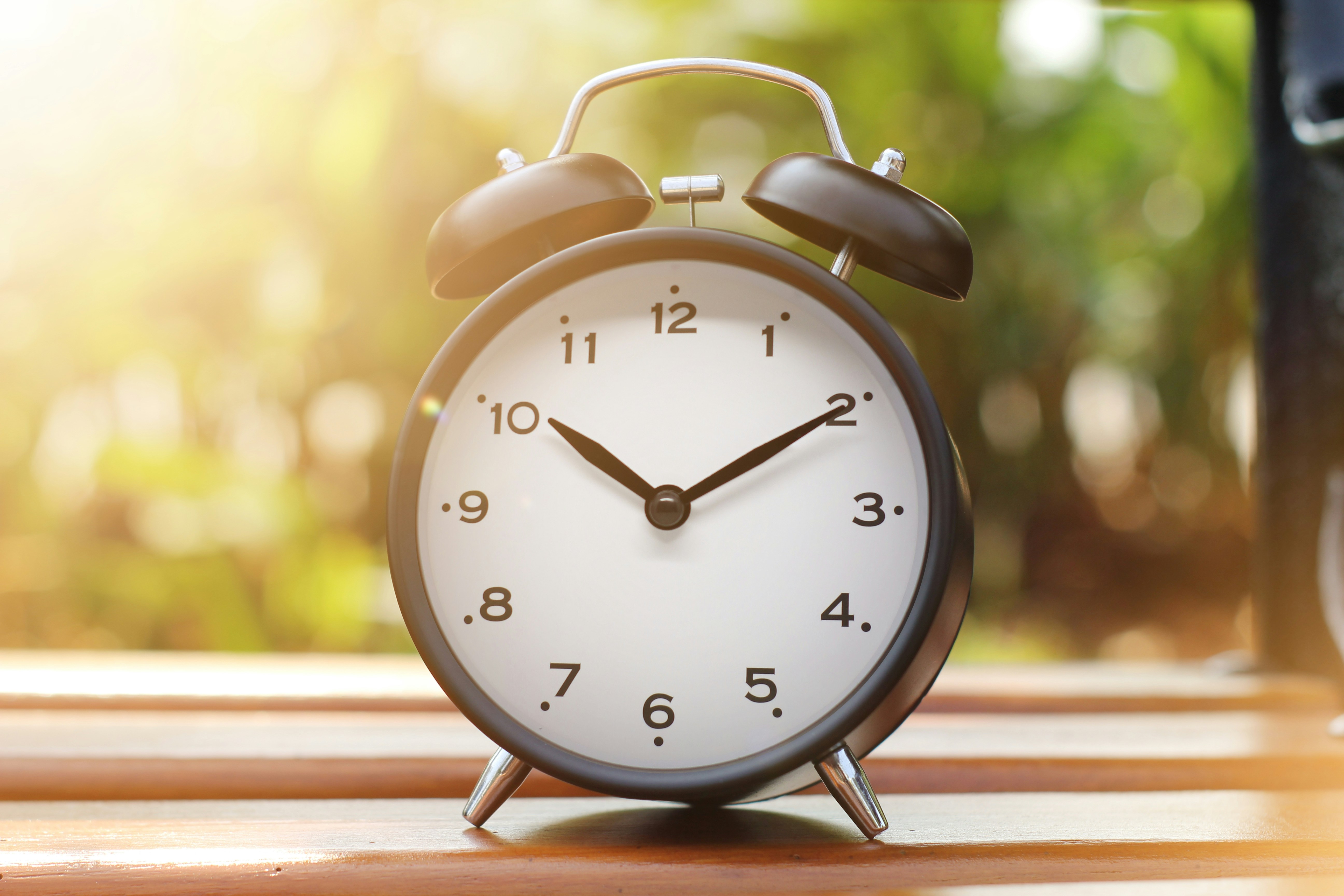
I’m writing this on Sunday, March 8, 2026, when most of us woke up with that sinking feeling that only Daylight Saving Time (DST) can bring: we lost another hour of our lives. Talk to anyone and you’ll agree that the debate about whether we should keep changing our clocks is over. NO ONE WANTS THIS! (Well, almost no one.) Some places have been brave enough to quit changing their clocks already (kudos, Arizona and that tiny corner of Indiana), and one more just got added to the list: British Columbia, where 90% of the citizens were in favor of never changing their clocks again.
I’m exhausted from the time change and exhausted from having this conversation. In 2022, the Senate unanimously passed a bill to abolish Daylight Saving Time, only to have it stalled in the House because we couldn’t agree on whether we should keep Permanent Daylight Time or Permanent Standard Time. I have a suggestion for how to end this, so please scroll to the bottom if you’d like to see the solution.
For the rest of us, if you’ve ever wondered why we still do this, you’re not alone. A January 2025 Gallup poll found that only 19% of Americans actually want to keep the twice-yearly clock change. The rest of us would prefer to just pick a time and stay there. What happened to majority rules?
And yet, here we are, still springing forward and falling back like it’s 1918. Because, well, it basically is.
I did a little digging about why we are still doing this incredibly stupid charade, so let me walk you through the history of how we got here, what’s been done to try to fix it, and why ending this practice once and for all would be genuinely good for us.
Why Do We Even Have Daylight Saving Time?
The short answer: war, energy conservation, and commerce.
Germany introduced daylight saving time in 1916 during World War I to conserve fuel. The United States followed with the Standard Time Act of 1918, adopting DST as a wartime energy measure on the theory that aligning waking hours with daylight would reduce the need to burn fuel for lighting. A noble cause.
It was immediately unpopular. Farmers especially hated it because it disrupted their schedules for getting milk and harvested crops to market. Congress abolished it after the war, overriding President Woodrow Wilson’s veto. It came back briefly during World War II under FDR, and then lingered in a chaotic, state-by-state patchwork until the Uniform Time Act of 1966 standardized the dates for the whole country.
Most people think farmers were the ones pushing for DST, but that’s a myth. They actually fought against it, hard. The groups that lobbied hardest to keep DST were retailers and the leisure industry. Golf and baseball, for example, were industries that benefit from people having more evening daylight to spend money. The golf industry has claimed that a single extra month of DST is worth around $400 million in revenue. A golf course in Omaha reported they’d lose 100 tee times a day without it.
How Many of Us Play Golf, Anyway?
So it’s probably worthwhile to let that sink in. If you don’t play golf, watch baseball, or participate in another sport that benefits from the extra daylight, you’re paying a tax on your life that simply doesn’t benefit you. 14.5% of people above the age of 6 play golf in this country. I hope they’re happy. Most children’s baseball teams start practicing around the end of March, when the days are naturally getting longer anyway, and 100% of the MLB, 75-85% of college, and 30-40% of all high school baseball diamonds have lights.
Stores claim that more commerce is done when it’s light out and there is a difference. They making a huge (not!) .9% more in the spring when we spring ahead and gain more light in the evening. It seems the reason we’re still changing our clocks twice a year is less about energy savings and much more about evening commerce & recreation. Recreation would be a great reason if it benefitted more of us, retail is not.
The Long, Frustrating Effort to End DST
The push to abolish the clock change isn’t new, and it has broad, bipartisan support. The problem has never been public opinion, it’s been Congressional gridlock and a genuine disagreement about which time we should keep permanently: standard time or daylight saving time.
Here’s a quick timeline of where things stand:
Late 2010s: More than 30 states passed resolutions urging Congress to end the twice-yearly change. The sentiment was clear: people were done.
2022: The Senate unanimously passed the Sunshine Protection Act, which would have made daylight saving time permanent nationwide. It was a rare moment of bipartisan agreement. Then it went to the House, where it died without a vote.
2023–2025: Multiple versions of the bill were reintroduced. In 2025, Maine and Texas joined 17 other states in passing legislation for permanent DST, pending federal approval. As of today, 19 states have passed some version of this legislation. None of it can take effect without Congress acting first.
April 2025: Even President Trump weighed in, posting on Truth Social that Congress should “push hard for more Daylight at the end of a day,” calling the clock change “a big inconvenience and a very costly event.” Presidential support, 19 states on board, overwhelming public agreement and…still nothing.
As of this morning, when you were dragging yourself out of bed an hour early, the U.S. has still not acted.
The Real Costs of the Clock Change
Beyond the annoyance, there’s mounting evidence that the biannual clock change has genuine consequences for public health and safety.
It’s hazardous to your health. The week after the spring clock change is associated with measurable spikes in heart attacks, strokes, and traffic accidents. Sleep disruption is not a minor inconvenience, it has real physiological effects, particularly for people who are already vulnerable. A 2025 Stanford study found that switching to permanent standard time could reduce obesity cases by 2.6 million and stroke cases by 300,000, because standard time better aligns with human circadian rhythms.
It affects productivity and safety at work. Research has documented increased medical errors, reduced worker productivity, and more workplace accidents in the days following the spring change. When you mess with people’s sleep, you mess with their performance.
It’s expensive and logistically absurd. Think about every system: hospital schedules, transportation timetables, financial markets, and school routines, that have to adjust twice a year. The coordination costs across industries and government are enormous, and for what?
Kids suffer for it. One of the most compelling and overlooked arguments against permanent daylight saving time (as opposed to just ending the change) is what it does to children in winter. Under permanent DST, kids in northern states would be waiting for school buses in complete darkness well into winter mornings. It’s a safety issue that often gets lost in the adult conversation about evening light.
Standard Time vs. Daylight Saving Time: Which Should We Keep?
This is where it gets complicated, and I want to be honest about the nuance here. Most of the advocacy in Congress has focused on making daylight saving time permanent, meaning we’d keep the clocks where they are in summer all year round. That’s what the Sunshine Protection Act proposes.
But the health and sleep science community has pushed back on that. The American Academy of Sleep Medicine and most sleep researchers argue that standard time is actually better for human health, because it better aligns with our natural circadian rhythms. The sun would be higher in the sky at noon, mornings would be brighter, and our bodies would have an easier time regulating sleep. In that January 2025 Gallup poll, 48% of respondents said they’d prefer to stay on standard time permanently, compared to 24% who preferred permanent DST.
So What Happens Now?
My proposal: Convene a roundtable of sleep experts. Not silly political appointees, people with actual depth and knowledge of how our bodies are affected by light and have them pick Daylight or Standard time. It sounds like they would quickly pick Standard Time. Senate and Congress should re-draft the 2022 bill around that decision and vote. The end. Everyone wins and our government can now say they did something positive since Trump landed in office.
If you want to see this change, the most direct path is telling your Congressional representatives that it’s a priority. It has public support, bipartisan backing, presidential interest, and 19 state legislatures already on record. The only thing missing is the political will to actually finish the job.
In the meantime, I’ll be sitting here, pissed off because this is a problem that doesn’t have to exist with a clear path forward to solve it.
If we can get this one thing done, who knows, maybe it will provide the momentum for us to continue to make some changes (like, throwing clearly corrupt people out of office and returning to some amount of safety and normalcy).
What do you think we should do about the time changes?