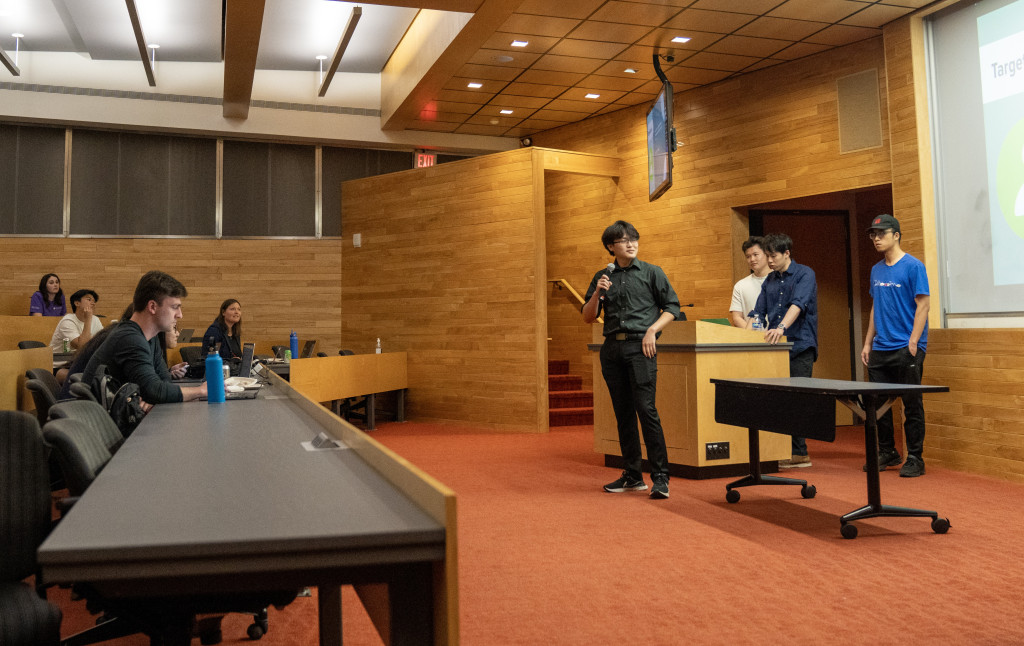
2025 brought many changes for UW-Madison’s Computer Science Capstone program. We grew the program to include another section this fall and welcomed 22 partners and 250 students from half a dozen majors, including Computer Science, Data Science, Product Management MBAs, and User Experience. Plus, we had our first two overseas partners: Nuu Mobile in China & Flexera in the United Kingdom. While both of these companies have a presence the United States, both teams leaned on mentors abroad to achieve their project results.
Nuu Mobile
Nuu Mobile is a consumer electronics company that designs and manufactures affordable, unlocked Android smartphones and tablets for the global market. They have a large presence in Texas, but a global headquarters in Hong Kong and the mentors for our project team were located there.
The project that students took on for Nuu Mobile was to develop a churn prediction platform for their customer success and the sales teams. Students used an AI model to take in customer data, including which customers stayed and which left, and then use it to predict which customers were struggling. The company could then focus some attention on those customers and prevent the upcoming churn.
Nuu Mobile’s marketing team worked with UW Communications to write an article about the experience. You can learn more about the project and the Capstone by reading the article here:
Flexera
Flexera is a global software company that provides IT asset management and technology intelligence solutions designed to help large enterprises gain visibility into their complex hybrid ecosystems. While Flexera is headquartered in Illinois, two of the company mentors for this project were located in the UK.
This team worked on an AI-powered sales platform that took in sales data and created a dashboard that the company could slice and dice to gain key sales feedback. This team went as far as to launch their tool into production and provided a functioning dashboard that Flexera can use beyond the confines of the Capstone course itself.
How Did Students Do While Working on a Global Team?
I teach my course in the evening, so when it came to student/partner meeting times and final demos, it was easy to incorporate the Hong Kong mentors. We just had their teams go last in our final demo line-up, giving mentors a chance to wake up the next day in Hong Kong and join remotely. As for communicating along the way, the teams had no issues beyond the normal forming, storming, norming, and performing that all teams have. One of the mentors in Hong Kong had gone to school at UW-Madison so he did a brilliant job of helping to bridge the communication and cultural gap. The students learned a lot about working with a team separated by an entire ocean and culture.
For Flexera, it was a little tougher. We had to schedule special times for our mid-semester and final demos and some of the expectations didn’t translate properly (despite there being no language barrier). Flexera wrote up a “Statement of Work” much like you would do for a contractor and then onboarded the students into their workforce (complete with background checks). They is not typically recommended for short-term student teams. That onboarding took far longer than expected (around a month) and really cut-off valuable time for the students to be working on the project. Even so, they turned in something fairly useful, a project whose AI model that can be tweaked in future semesters.
Going Global
Is working on a global team ideal? It doesn’t matter because so many teams are global these days. What these students got was a real-world dose of what it’s like to work on a global team and that experience will be invaluable. Most of them will be working on global teams in the future. I’m glad they got the chance to participate in these two projects and thank Nuu Mobile and Flexera for the opportunity to work with them!